
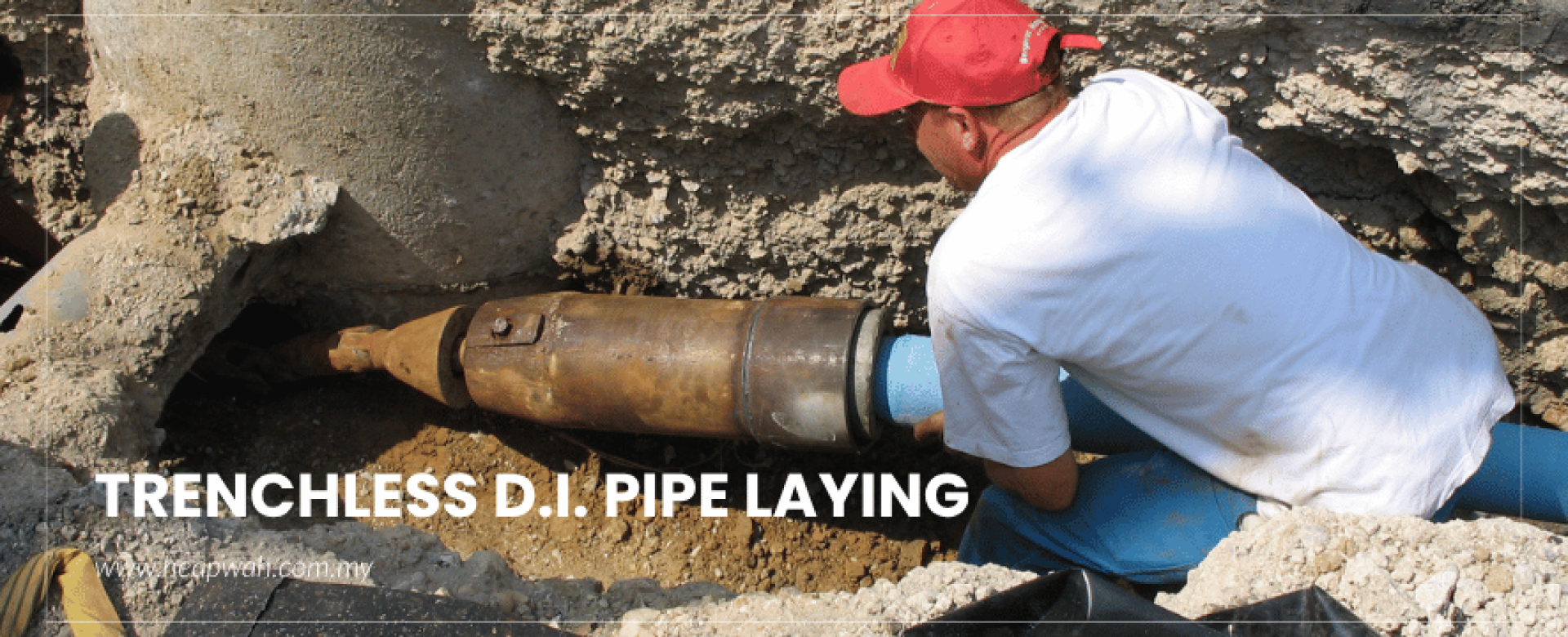
Modern infrastructure projects increasingly need to install or replace underground pipelines without creating extensive disruption at ground level. In busy roads, developed urban areas, environmentally sensitive locations and crossings beneath rivers or other obstacles, conventional open-trench construction may not always be the most practical approach.
Trenchless pipe installation provides an alternative by allowing pipelines to be installed underground while significantly reducing the amount of surface excavation required.
For water infrastructure applications, PAM ductile iron pipe offers a combination of strength, durability, joint flexibility and pulling resistance that makes ductile iron suitable for several trenchless installation methods.
PAM identifies three principal techniques for trenchless installation using ductile iron pipelines:
These applications are made possible by the mechanical characteristics of ductile iron together with specially designed self-anchored joint systems.
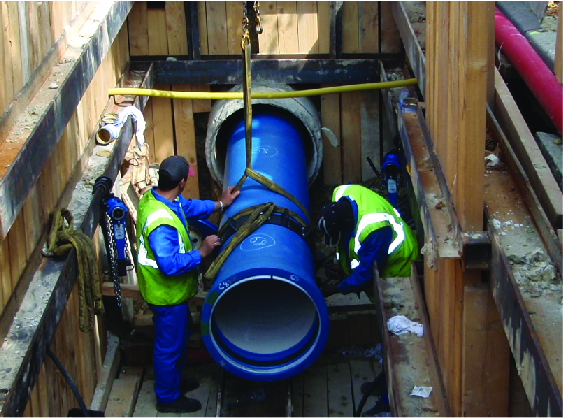
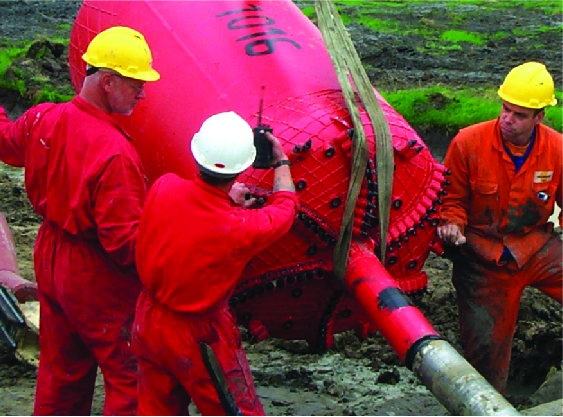
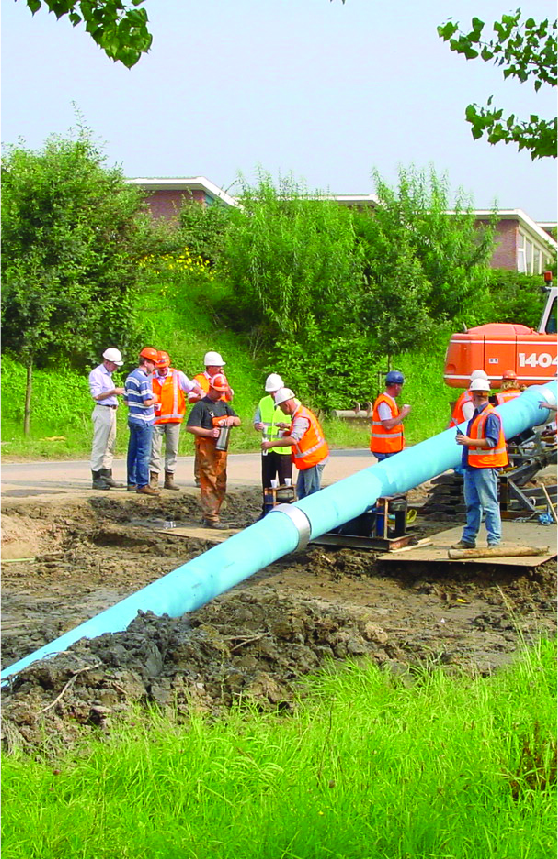
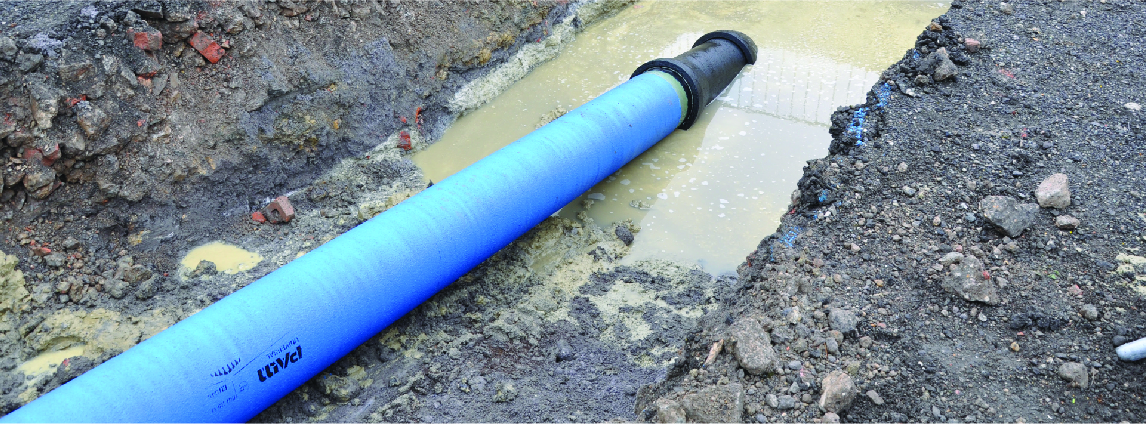
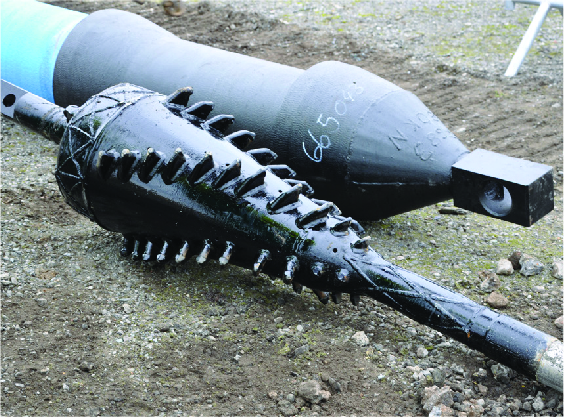
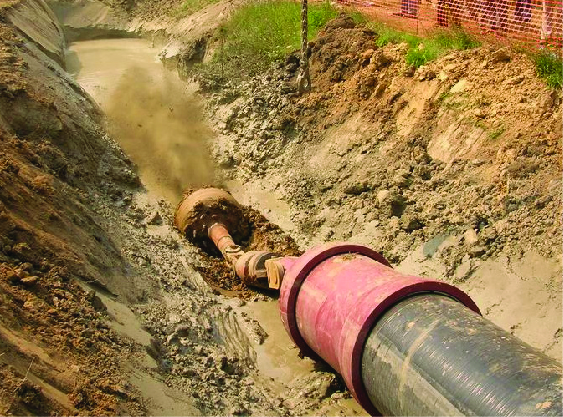
Ductile iron trenchless installation
Trenchless pipe installation is a general term used for underground pipeline construction techniques that minimise the need for continuous open excavation.
In conventional open-trench installation, the route is excavated, the pipe is lowered into the trench, the joints are completed and the excavation is backfilled.
Trenchless construction approaches the problem differently.
The underground route is created, enlarged or reused first, and the pipeline is then pulled or installed through that route.
This can be useful when the pipeline needs to pass beneath areas where surface excavation would be difficult or undesirable.
Typical applications include:
The appropriate trenchless technique depends on the nature of the project.
For new crossings, horizontal directional drilling is one of the most important methods.
For replacement of existing underground pipelines, pipe bursting may be considered.
Where a sleeve or casing is already available, the pipeline can also be installed by pulling through a casing.
The major advantage of trenchless technology is that the pipeline does not need to be exposed along its full length during construction.
This can reduce the effect of the project on the surrounding environment and infrastructure.
For example, an underground pipeline crossing a road could require extensive excavation, traffic management, backfilling and road reinstatement if installed using a conventional open trench.
A suitable trenchless pipe installation may allow the pipeline to pass beneath the road while limiting excavation to selected working areas.
The same principle can apply when crossing waterways or other surface obstacles.
Trenchless installation can therefore help reduce:
However, trenchless construction is not automatically suitable for every pipeline.
Ground conditions, pipeline diameter, project length, allowable bend radius, installation forces and available equipment must all be evaluated before the installation method is selected.
PAM ductile iron systems can be used with three major trenchless installation techniques.
Horizontal directional drilling, commonly known as HDD, creates a new underground bore along a controlled alignment.
The pipe is then pulled through the prepared bore.
This technique is particularly useful when crossing beneath obstacles.
Pipe bursting is primarily used for pipeline replacement.
An existing pipe is broken or displaced underground while the replacement pipe is pulled into approximately the same alignment.
In this method, the final carrier pipeline is pulled through an existing or specially installed sleeve or casing.
The casing provides an underground route through which the actual pipeline is installed.
All three techniques create different installation forces and therefore require a pipe system designed for the intended construction method.
Horizontal directional drilling is one of the most important forms of trenchless pipe installation.
Unlike a straight horizontal bore, HDD allows the drilling path to follow a controlled curved trajectory underground.
This enables the pipeline to pass beneath an obstacle and return towards the surface at the opposite side.
The process generally consists of three main stages:
Each stage affects the final installation.
Horizontal directional drilling generally involves three major stages.
The first stage is the creation of a pilot bore along the planned pipeline alignment.
A drilling head containing an electronic sonde is guided along the required underground path. According to PAM’s system description, the detection and guidance equipment enables the drilling operator to follow the planned route with high accuracy.
The drilling rods perform several functions during this process, including pushing and rotating the drilling head, controlling its direction, transporting drilling fluid and subsequently helping to install the pipeline.
Project feasibility depends on factors including ground conditions, stratigraphy, drilling radius, route geometry, pipeline characteristics and available installation space.
After the pilot hole reaches the exit point, the bore is enlarged to create sufficient space for the pipeline.
A reaming or boring tool is pulled through the pilot hole to increase its diameter.
Depending on the pipe size, bore length and ground conditions, several enlarging passes may be required before the final pipe can be installed.
Drilling fluid is commonly used during this process to cool the equipment, stabilise the bore and reduce friction.
Once the bore has been prepared, the assembled pipeline is pulled through the underground route.
Drilling mud containing bentonite plays an important role during this process. It helps cool the drilling equipment, stabilise the bore wall, remove spoil and reduce friction while the pipeline is being pulled.
This pulling stage is one of the reasons why the design of the pipe joints becomes particularly important.
PAM ductile iron pipe combines the mechanical strength of ductile iron with a restrained joint system designed for installation conditions that involve substantial longitudinal loads.
For trenchless applications, PAM uses self-anchored joint technology that helps maintain the connection between successive pipe sections during pulling.
The pipe system also retains angular flexibility.
This combination is important because a trenchless pipeline must perform two functions simultaneously.
It must be:
Strong enough to withstand installation forces
and
Flexible enough to follow the designed underground route.
A completely rigid joint system could make it difficult to follow the bore alignment.
A connection without sufficient restraint, on the other hand, may not be suitable for the pulling loads created during HDD.
The PAM system addresses both requirements through the combination of ductile iron pipe and self-anchored joints.
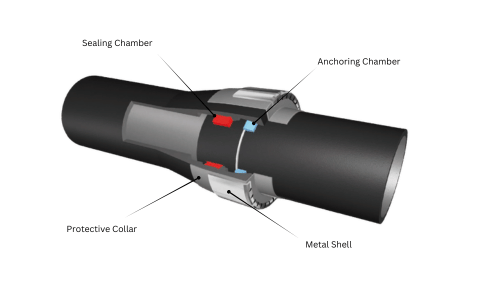
One of the key technologies used in PAM trenchless applications is the Universal Ve self-anchored joint.
The joint is designed to provide:
These characteristics are particularly important in HDD.
When the pipeline is pulled through the bore, the joints are not simply connecting individual pipes hydraulically.
They also help transmit the installation load from one pipe section to the next.
For larger diameters, trenchless installations can generate very substantial forces.
The PAM anchoring system is designed for pulling loads reaching very high levels in large-diameter applications.
The actual allowable pulling force, however, depends on pipe diameter, installation length and project conditions.
Engineering assessment remains necessary before construction.
Horizontal directional drilling does not normally follow a perfectly straight route. The pipeline often needs to descend beneath an obstacle, travel through the underground section and then rise towards the exit point. A ductile iron pipeline therefore requires controlled angular deflection between individual pipe sections.
PAM Universal Ve joints allow angular movement between adjoining pipes. The allowable angular deflection varies with pipe diameter. For several smaller and medium diameters, joint deflection can reach approximately 3 degrees.
As pipe diameter increases, the allowable joint angle reduces. The important point is that the pipeline curve is created progressively over multiple pipe sections rather than forcing a large change in direction at a single joint. This allows the pipeline to follow the designed HDD alignment while keeping individual joint deflections within permitted limits.
Another characteristic of PAM ductile iron pipe is its modular construction.
Instead of requiring one continuous pipe section, the pipeline consists of individual pipes joined together.
This creates several possible installation strategies.
The pipes can be:
The most appropriate method depends largely on the available working area.
For a site with plenty of space, assembling a longer pipeline string before pullback may be practical.
At a restricted site, however, there may not be enough space to prepare hundreds of metres of pipe in one straight line.
In that situation, shorter sections or pipe-by-pipe installation may provide greater flexibility.
This modularity can be particularly useful for trenchless construction in developed areas.
Pulling resistance is one of the major engineering considerations in HDD.
Resistance can come from several sources, including:
The longer the pipe string, the greater the total resistance can become.
Support rollers may be used in the pipe preparation area to reduce friction before the pipe enters the bore.
These rollers help guide the pipeline and reduce unnecessary resistance during pullback.
The entire installation should be planned so that the expected pulling load remains within the permitted capacity of the pipe and joints.
Large-diameter trenchless pipe installation creates another engineering issue: buoyancy.
When a large ductile iron pipe is surrounded by drilling fluid, the fluid generates an upward force. For pipes above certain diameters, this can cause the pipe to press against the upper surface of the bore. That contact can increase friction and pulling resistance.
One solution is temporary ballasting.
A smaller flexible conduit can be installed within the main pipe and used to introduce water. The ballast changes the effective weight of the pipeline during pullback and helps position it more favourably within the bore.
This can reduce contact with the upper bore surface and help manage installation forces. Ballasting requirements should be calculated for the specific project.
The outside of a pipeline can experience demanding conditions during trenchless installation.
During HDD, the pipe is pulled through a bore containing soil, drilling fluid and potentially abrasive material.
The socket and external pipe surface may come into contact with the surrounding ground.
For this reason, external pipe protection is an important part of a trenchless ductile iron system.
PAM offers specialised external protection for trenchless applications, including ZMU-coated ductile iron pipes.
The protective system is intended to support pipe installation in demanding ground conditions while also providing long-term external protection after installation.
PAM’s DIREXIONAL ZMU range is designed specifically for trenchless pipe laying applications.
The range covers ductile iron pipes from approximately:
DN 100 to DN 1000
This provides options for a broad variety of pipeline projects.
The final selection should not be based on nominal diameter alone.
Engineers also need to consider:
The pipe is therefore only one component within the overall trenchless system.
A typical pipe bursting operation uses launch and exit pits. A drilling or pulling system passes through the old pipeline. A bursting head is then attached. As the equipment is pulled back, the bursting head breaks the old pipe.
The fragments remain around the existing alignment while the new pipeline is pulled into the space created. A replacement ductile iron pipeline can be assembled progressively from the launch area. Depending on project conditions, the replacement pipe may have approximately the same diameter as the old pipeline or, in some situations, a somewhat larger diameter.
Pipe bursting is not suitable for every existing pipeline.
The existing route must first be assessed.
Important considerations include:
Straight pipeline sections are particularly important for this technique.
The old pipeline should also be inspected before work begins.
Video inspection can help identify obstructions or other conditions that could interfere with the bursting operation.
Where branch connections exist, these may need to be separated before replacement work begins.
Temporary arrangements may also be required where existing water service must be maintained during construction.
Another important form of trenchless pipe installation involves pulling the final pipeline through a casing.
A casing is a larger-diameter sleeve through which the actual service pipe is installed.
The casing may already exist or may be installed specifically for the project.
This approach can be used for:
PAM ductile iron pipe is suitable for this type of application because restrained joints can transmit the pulling force while elastomeric sealing systems maintain flexibility.
Several factors need to be established before pipe installation begins. These elements need to be evaluated as a complete system.
The carrier pipe needs to remain correctly positioned within the casing.
Guiding supports or collars help the pipe travel along the intended line.
The pipe joints must remain anchored while the pipe string is pulled.
The space between the carrier pipe and the casing must be sufficient for guiding and centring components.
The pulling mechanism needs to provide sufficient force without exceeding allowable pipe or joint loads.
The installed section must eventually be connected to the main pipeline network at both ends.
An important principle when installing ductile iron pipe through a casing is that the pipeline should be pulled through the casing rather than pushed. Pulling allows the longitudinal forces to be controlled through the restrained joint system. The first pipe is connected to the pulling equipment and drawn into the casing.
The next pipe is then joined and the process continues. Pipe installation proceeds progressively until the required length has been installed. The pulling equipment is then removed, the pipeline can be tested and final network connections can be completed.
Larger pipe diameters may require specialised centring and guiding arrangements. This becomes particularly important where the annular space is limited or the installation geometry is complex.
The support system must have enough capacity to carry the pipeline while also minimising resistance during pulling. Some projects may require custom-designed supports. In suitable casing configurations, it may even be possible to accommodate more than one carrier pipeline within a larger casing, although such arrangements require project-specific engineering.
When considering PAM ductile iron pipe for trenchless projects, it is useful to think beyond the pipe barrel itself.
The complete system can involve:
Each part contributes to the performance of the overall pipeline during installation.
Selecting individual components without considering the complete trenchless system can create unnecessary risks during construction.
For infrastructure projects where continuous open-trench excavation is difficult or undesirable, trenchless pipe installation can provide an alternative method of constructing underground pipelines.
Horizontal directional drilling makes it possible to create a controlled underground route beneath obstacles.
Pipe bursting can provide a method of replacing suitable existing pipelines.
Pulling through a casing allows the carrier pipeline to be installed through an existing underground sleeve.
For these applications, PAM ductile iron pipe combines ductile iron strength with restrained joints, controlled angular deflection and specialised protection systems designed for demanding installation conditions.
The best solution ultimately depends on the complete project.
Pipe diameter, pressure, ground conditions, route geometry, installation length, expected pulling force and working space should all be evaluated before the final system is selected.
Heap Wah supplies PAM ductile iron pipe and associated pipeline components for water and infrastructure projects.
For trenchless installation enquiries, customers can submit their:
BOQ, drawings, technical specifications, pipe diameter, pressure requirement, installation method and project details.
This allows the overall requirement to be reviewed together rather than selecting pipes, fittings and accessories individually without considering the complete system.
Contact Heap Wah for PAM ductile iron pipe, fittings and trenchless pipeline project enquiries.
What is trenchless pipe installation?
Trenchless pipe installation is a method of installing or replacing underground pipelines while minimising continuous surface excavation. Common methods include horizontal directional drilling, pipe bursting and pulling a pipeline through a casing.
What is horizontal directional drilling?
Horizontal directional drilling, or HDD, is a trenchless method where a guided pilot bore is drilled underground, enlarged and then used to pull the final pipeline through the completed route.
Can ductile iron pipe be installed using HDD?
Yes. Ductile iron pipe can be used for horizontal directional drilling when the pipe system has suitable restrained joints, allowable angular deflection, external protection and sufficient pulling capacity.
Why are self-anchored joints important for HDD?
During HDD, the pipe string is pulled through an underground bore. Self-anchored joints help transmit the pulling forces from one pipe section to another while maintaining the integrity of the pipeline.
What is PAM Universal Ve?
PAM Universal Ve is a self-anchored ductile iron joint system used where longitudinal restraint is required. It combines joint restraint with controlled angular deflection.
What pipe sizes are available for PAM trenchless installation?
PAM’s DIREXIONAL ZMU range includes ductile iron pipe sizes from approximately DN 100 to DN 1000.
What is ZMU coating?
ZMU is an external protection system used on PAM ductile iron pipe for demanding underground applications, including trenchless installation.
What is pipe bursting?
Pipe bursting is a trenchless pipeline replacement method where an existing underground pipe is broken or displaced while a replacement pipe is pulled into its route.
Can PAM ductile iron pipe be pulled through a casing?
Yes. PAM ductile iron pipe can be installed through suitable casings using restrained joints, guiding and centring equipment and an appropriate pulling system.
Should ductile iron pipe be pushed through a casing?
For this type of installation, the pipe should be pulled through the casing rather than pushed.
What determines HDD bore diameter?
Bore diameter depends on pipe size, socket diameter, installation length, soil conditions, curve radius and other project-specific factors.
Why is bentonite used during HDD?
Bentonite drilling fluid can help cool drilling equipment, stabilise the bore, remove excavated material and reduce friction during pipe pullback.
Why might large pipes require ballasting during HDD?
Large pipes can experience upward buoyancy forces when surrounded by drilling fluid. Temporary water ballast can help control the pipe position and reduce contact with the upper part of the bore.
Can PAM ductile iron pipes be assembled in sections?
Yes. Depending on available site space, the pipes can be assembled as a complete string, in shorter sections or progressively pipe by pipe.
What information is required for a trenchless pipe quotation?
Useful information includes DN, operating pressure, installation length, drawings, BOQ, ground conditions, installation method, fittings, joint requirements and project location.
WhatsApp us