
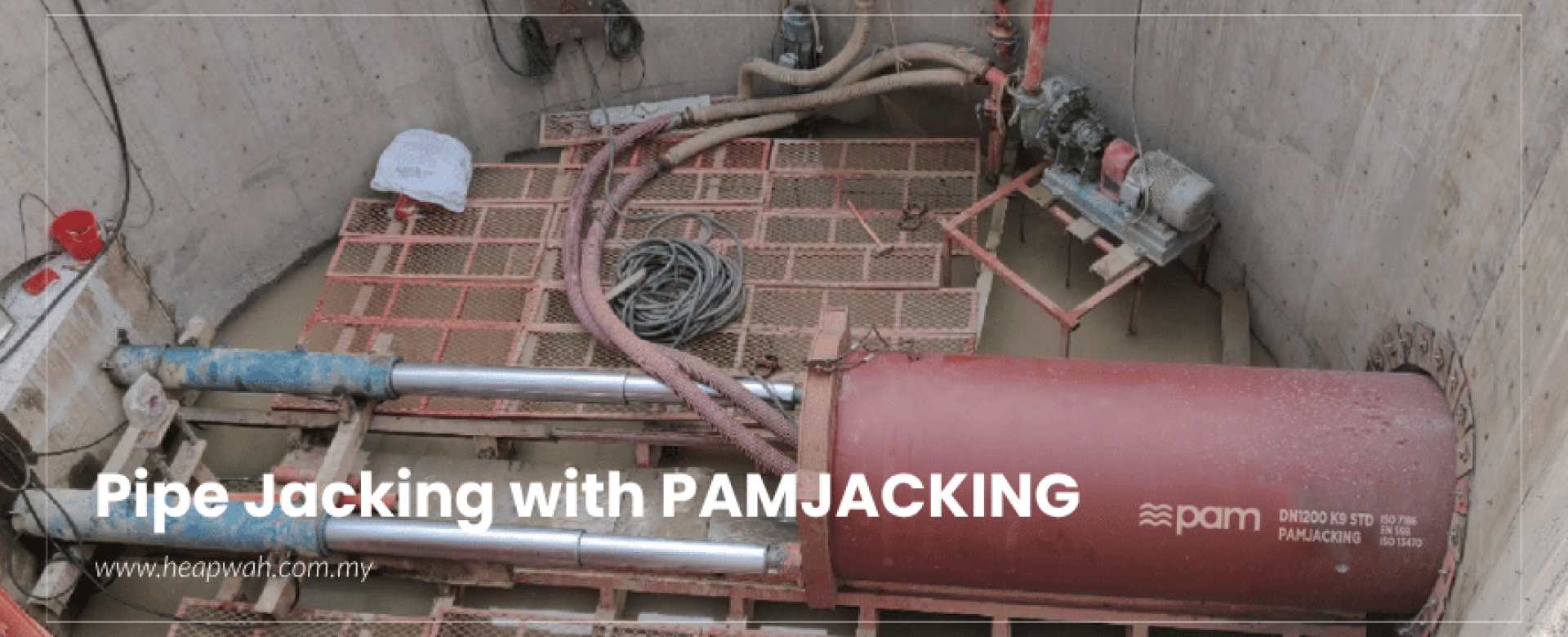
Installing large underground pipelines in developed areas can be challenging.
Major water supply, drainage and sewer pipelines may need to pass underneath highways, rivers, buildings, existing utilities and other infrastructure where conventional open-trench excavation would create substantial disruption.
In these situations, pipe jacking provides an alternative method of constructing underground pipelines with significantly less excavation along the pipeline route.
Instead of opening a continuous trench, pipe jacking uses a jacking system to progressively push specially designed pipe sections through the ground between designated working pits.
For water, drainage and sewer infrastructure, the pipe itself must be capable of handling demanding construction conditions. It needs sufficient structural strength, reliable joints, resistance to external loads, corrosion protection and the ability to withstand the considerable axial forces generated during jacking.
PAMJACKING ductile iron pipe is specifically designed for this type of trenchless pipeline construction.
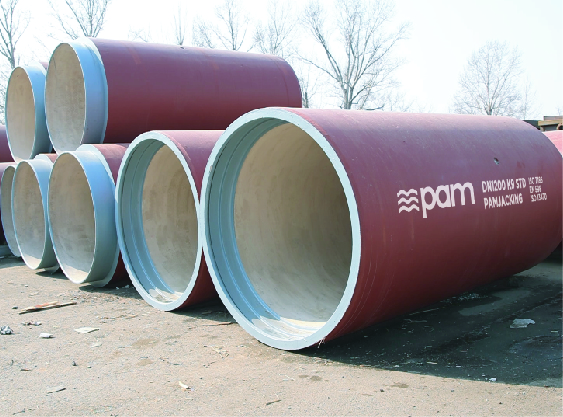
Combining a ductile iron pipe body with reinforced concrete protection, push-in flexible joints and features designed for the jacking process, PAMJACKING provides a complete pipe solution for demanding underground projects.
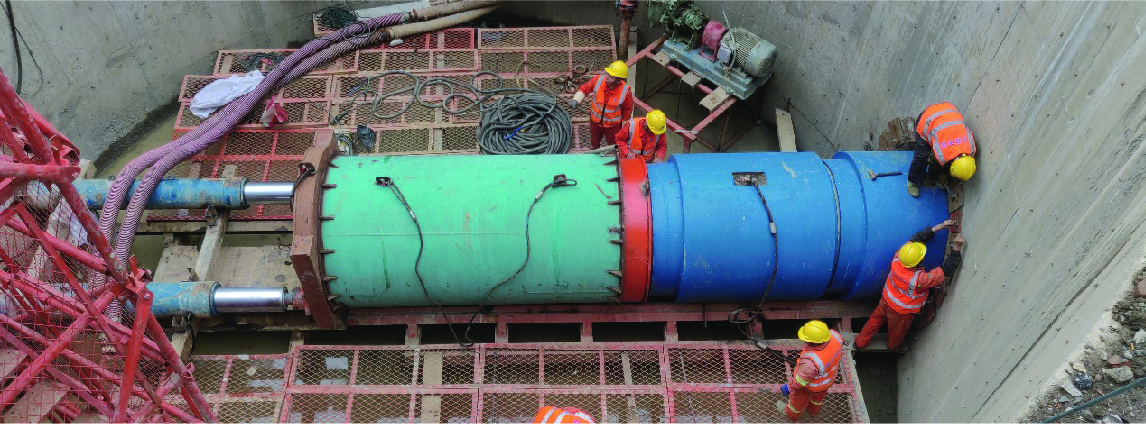
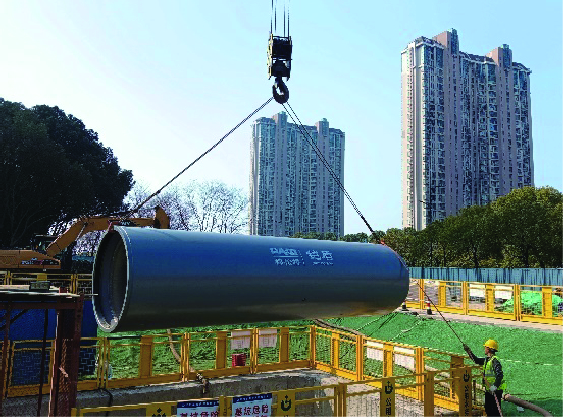
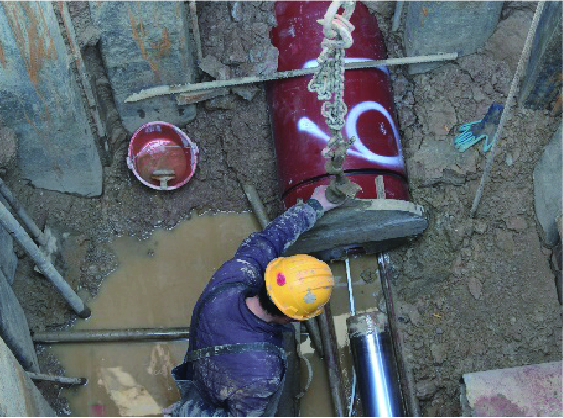
Pipe Jacking with PAMJACKING Ductile Iron Pipe
Pipe jacking is a trenchless construction method used to install underground pipelines without excavating a continuous trench along the entire route.
A launch or thrust pit is constructed at one end of the crossing and a reception pit is constructed at the other.
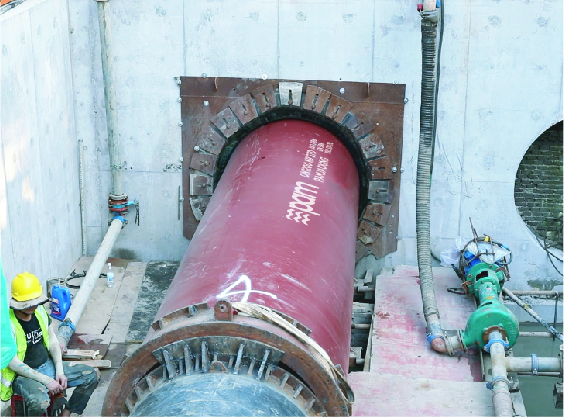
Inside the thrust pit, hydraulic jacks provide the force required to push the pipeline forward.
A pipe jacking machine excavates the ground ahead of the pipeline while additional pipe sections are progressively added behind the machine.
As excavation continues, the jacks push the complete pipe string forward through the ground.
Eventually, the pipe jacking machine reaches the reception pit and the underground pipeline section is completed.
This process allows pipelines to pass underneath areas where excavation from the surface may be undesirable or technically difficult.
Typical obstacles can include:
Because most of the construction occurs underground, pipe jacking can be particularly valuable in locations where maintaining surface activity is important.
Traditional pipeline construction normally begins by excavating a trench along the proposed pipe alignment.
The pipe is then lowered into the trench, connected and covered with selected backfill material.
This technique remains widely used, but it can become difficult where the pipeline passes through densely developed areas or beneath major infrastructure.
Open excavation may require:
Pipe jacking takes a different approach.
Only specific working pits are required along the underground route rather than excavating the complete pipeline alignment.
The pipeline is installed beneath the obstacle while the surface above can remain substantially undisturbed.
This makes pipe jacking construction particularly relevant for major infrastructure projects where surface access is limited.
The suitability of pipe jacking depends on the project, ground conditions, pipeline diameter, alignment, depth and available construction equipment. For PAMJACKING systems, pipe jacking is particularly relevant to larger underground pipeline projects where high structural and installation performance is required.
Pipe jacking can be used for major underground infrastructure involving:
A pipe installed using pipe jacking experiences very different forces from one installed in a conventional open trench. In open-trench construction, the pipe is generally lowered into position. In a jacking operation, the pipe becomes part of the construction system itself. Hydraulic jacks continuously apply axial force to the pipe string to move it forward through the soil.
The pipe may also experience:
The jacking pipe therefore requires several important characteristics.
The pipe must safely transmit the force required to advance the pipeline underground.
Deep underground pipelines can experience significant external ground loads. The pipe needs sufficient stiffness to control deformation.
Each pipe section must be connected securely and efficiently while maintaining sealing performance.
Because a trenchless pipeline can be difficult to access after installation, long-term corrosion protection is especially important.
The exterior of the pipe may experience contact with surrounding soil, gravel or other materials during jacking.
Small directional adjustments may be required while the pipeline progresses through the ground.
A typical pipe jacking project involves several stages. Although the exact construction procedure depends on site conditions, the general sequence includes:
Each stage needs to be coordinated carefully because problems that occur underground can be much more difficult to correct than issues in an exposed pipeline.
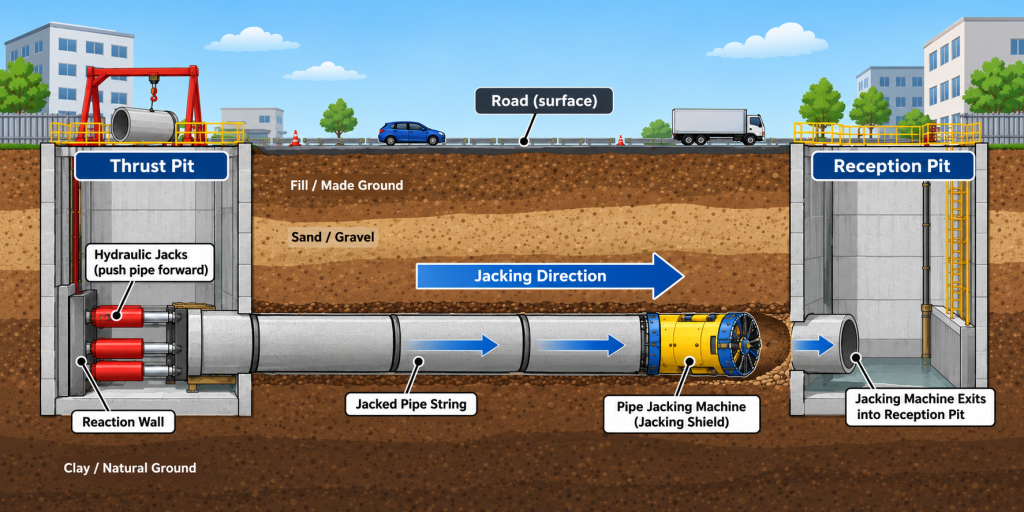
The two principal access points in a pipe jacking project are the thrust pit and reception pit.
The thrust pit contains the main jacking system.
Hydraulic jacks apply force against the pipeline, pushing both the pipe sections and the jacking machine through the ground.
The thrust pit therefore needs to be designed to withstand substantial reaction forces.
It also needs sufficient working space for:
The reception pit is positioned at the opposite end of the jacking section. The pipe jacking machine eventually enters this pit after completing the underground drive. The reception pit allows the machine to be removed and the new pipeline to be connected to the next section of the network.
The pipe jacking machine performs the excavation at the front of the pipeline. As material is removed from the face, the hydraulic jacking system pushes the machine and pipe string forward.
Excavated material must then be transported away from the cutting face. The exact equipment depends heavily on the pipe jacking method selected. Ground conditions are therefore one of the most important factors when determining the construction system.
One pipe jacking technique highlighted for trenchless construction is the mud-water balance pipe jacking method.
In this system, a pipe jacking machine excavates the soil at the front of the pipeline while hydraulic jacks continue pushing the pipe string forward.
Excavated soil is mixed into slurry or muddy water and transported away from the excavation face through a dedicated discharge system.
The system is designed to maintain controlled conditions at the cutting face while excavation continues.
This is particularly important where underground soil and groundwater conditions require careful management.
The stability of the excavation face is a critical consideration in underground construction.
In mud-water balance pipe jacking, two forms of balance are particularly important.
The first is maintaining an appropriate relationship between the operating pressure of the pipe jacking machine and the surrounding soil and groundwater pressure.
The second is controlling the relationship between the quantity of material excavated and the amount transported away through the slurry system.
Maintaining these conditions helps create a controlled underground excavation process.
Proper control can contribute to:
The actual operating parameters must be determined according to the geological and groundwater conditions at the site.
Different pipe jacking methods may be selected according to geological conditions and project requirements.
Two methods include:
Both are designed to manage the conditions at the excavation face while the pipe jacking machine progresses underground.
The choice between the systems depends on factors such as:
The pipe itself must remain capable of handling the structural and jacking requirements regardless of the selected excavation system.
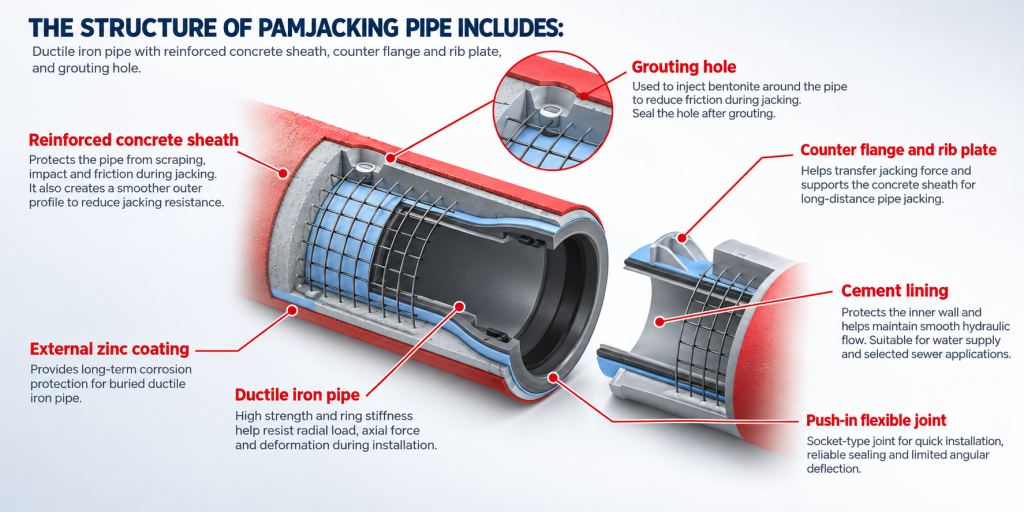
PAMJACKING ductile iron pipe is a pipe system developed specifically for pipe jacking and trenchless construction.
Unlike a standard ductile iron pipeline intended primarily for conventional open-trench installation, PAMJACKING incorporates additional features to address the special loads encountered during underground jacking.
The system combines:
Together, these elements allow the pipe to perform as both a pressure pipeline and a structural component during trenchless construction.
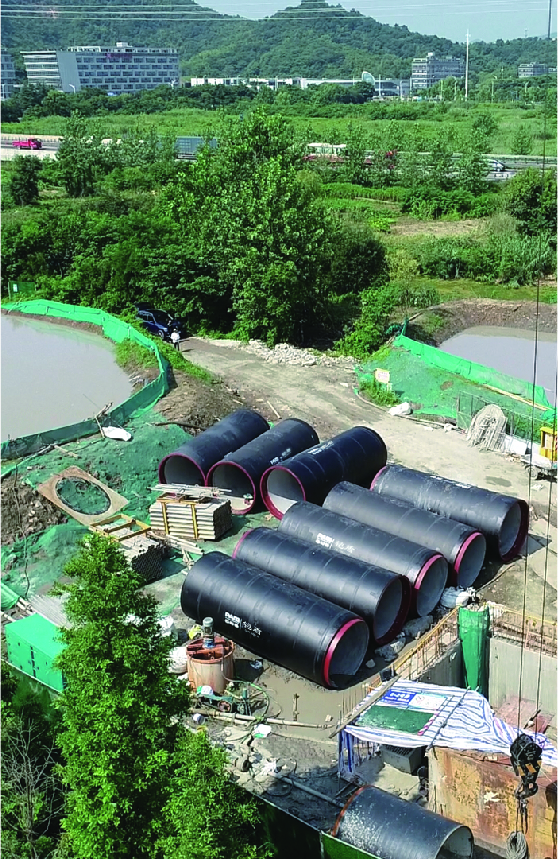
The main PAMJACKING ductile iron pipe range covers large-diameter jacking pipes from DN400 to DN2200, providing options for major water supply, sewerage, drainage and underground infrastructure projects.
Pipe dimensions and allowable pushing forces increase according to nominal diameter. This is important because the pipe must not only perform as a permanent pipeline after installation, but must also withstand the axial forces generated during the pipe jacking construction process.
| Pipe Size | Joint | Wall Thickness Class | Nominal Wall Thickness | Concrete Sheath Thickness | Allowable Pushing Force |
|---|---|---|---|---|---|
| DN400 | TYT | K9 | 8.1 mm | 41 mm | 1,350 kN |
| DN500 | TYT | K9 | 9.0 mm | 41 mm | 1,910 kN |
| DN600 | TYT | K9 | 9.9 mm | 44 mm | 2,720 kN |
| DN700 | TYT | K9 | 10.8 mm | 48 mm | 2,720 kN |
| DN800 | TYT | K9 | 11.7 mm | 56 mm | 3,300 kN |
| DN900 | TYT | K9 | 12.6 mm | 59 mm | 4,140 kN |
| DN1000 | TYT | K9 | 13.5 mm | 60 mm | 5,080 kN |
| DN1200 | STD | K9 | 15.3 mm | 66 mm | 7,240 kN |
| DN1400 | STD | K9 | 17.1 mm | 72 mm | 9,020 kN |
| DN1500 | STD | K9 | 18.0 mm | 79 mm | 11,350 kN |
| DN1600 | STD | K9 | 18.9 mm | 81 mm | 12,360 kN |
| DN1800 | STD | K9 | 20.7 mm | 86 mm | 12,360 kN |
| DN2000 | STD | K9 | 22.5 mm | 106 mm | 16,970 kN |
| DN2200 | STD | K9 | 24.3 mm | 112 mm | 16,970 kN |
The table shows how the structural requirements increase considerably as pipe diameter becomes larger.
For example, the allowable pushing force increases from 1,350 kN for DN400 to as much as 16,970 kN for DN2000 and DN2200.
This high pushing-force capacity is particularly important for large diameter pipe jacking, where the hydraulic jacking system must move a long pipe string through the surrounding ground while overcoming friction and soil resistance.
The thickness of the reinforced concrete sheath also increases with pipe size. This additional external protection helps the pipe withstand mechanical contact during installation while creating a more uniform external profile for jacking.
However, the allowable pushing force shown for the pipe should not automatically be treated as the required jacking force for a project.
The actual force required during construction depends on factors such as:
The expected construction load should therefore be calculated for each project and kept within the allowable limits of the selected pipe system.
Selecting a pipe material for pipe jacking construction involves more than comparing initial pipe cost.
The pipeline must perform during installation while also meeting the hydraulic, structural and durability requirements of the completed system.
Important factors include:
The following table provides a practical comparison of ductile iron jacking pipe, steel jacking pipe and reinforced concrete jacking pipe.
| Pipe Characteristic | Ductile Iron Jacking Pipe | Steel Jacking Pipe | Reinforced Concrete Jacking Pipe |
|---|---|---|---|
| Joint Type | Socket and spigot | Welded joint | Socket and spigot |
| Corrosion Resistance | Excellent; stated service range of 70-100 years | Poor; stated range of 20-30 years and unsuitable for transporting corrosive water without appropriate protection | Poor; stated range of 10-15 years |
| Head Loss / Inner Wall Roughness | Good | Bad | Poor |
| Internal Pressure Resistance | High – approximately 3 times PFA | Relatively high – approximately 1.6-1.8 times PFA | Low – approximately 1.0 times PFA |
| Anti-Leakage Performance | High | Relatively high | Low |
| Resistance to Localised Ground Settlement | High | Low | Relatively high |
| Construction Difficulty | Low | High | Low |
| Installation Efficiency | High | Low | High |
| Construction Cost | Low | High | Low |
| Total Cost of Ownership (TCO) | Moderate | High | High |
The differences between the three materials become more important when the pipeline must operate as both a permanent pressure pipeline and a structural component during trenchless installation.
PAMJACKING ductile iron pipe uses a socket-and-spigot connection rather than relying on a fully welded joint between every pipe section.
During pipe jacking, pipes are installed progressively from the thrust pit.
A push-in connection can simplify this process because each new pipe section can be assembled without carrying out a complete circumferential field weld.
Steel jacking pipe, by comparison, typically requires welding during installation. This increases the level of specialised work required inside the construction pit.
For long pipe jacking drives involving many pipe sections, jointing time can have a significant effect on overall installation efficiency.
Corrosion resistance is especially important for underground pipeline construction because accessing the completed pipeline for repair can be difficult.
The comparison above rates ductile iron jacking pipe more favourably in this area.
PAMJACKING combines several protective elements, including external corrosion protection and a reinforced concrete sheath around the ductile iron pipe.
Steel pipelines can also be protected, but additional coating and corrosion-control systems may be required depending on the environment.
For every material, the final protection system should still be selected according to actual:
The internal surface of a pipeline affects the resistance encountered by water flowing through it.
The comparison rates the internal hydraulic characteristics of ductile iron jacking pipe as good, compared with poorer ratings for the other two systems.
For water supply applications, PAMJACKING can use an internal cement mortar lining that provides a smooth internal surface while protecting the ductile iron pipe wall.
This becomes particularly important for large-diameter water transmission pipelines where hydraulic performance affects the long-term operation of the system.
Not every pipe jacking project is a gravity pipeline.
Water transmission systems and pressurised sewer applications can require the jacked pipeline to withstand significant internal operating pressure.
According to the comparison, ductile iron jacking pipe provides the highest internal pressure resistance of the three materials:
Ductile iron jacking pipe: approximately 3 times PFA
Steel jacking pipe: approximately 1.6-1.8 times PFA
Reinforced concrete jacking pipe: approximately 1.0 times PFA
This makes pressure performance an important consideration when comparing pipe materials for a water supply pipeline installed by pipe jacking.
The actual design pressure, test pressure and allowable operating conditions should nevertheless be confirmed according to the selected pipe specification and project requirements.
Joint integrity is another important consideration for underground pipelines.
The comparison rates:
Ductile iron jacking pipe: High
Steel jacking pipe: Relatively high
Reinforced concrete jacking pipe: Low
PAMJACKING uses an elastomeric gasket within its socket-and-spigot joint to provide the hydraulic seal between adjacent pipe sections.
For a deeply buried trenchless pipeline, reliable sealing is particularly important because accessing a failed underground joint after construction can be difficult.
Ground conditions are rarely completely uniform.
Variations in soil, groundwater and underground loading can cause small amounts of differential or localised settlement.
The material comparison rates ductile iron jacking pipe as having high resistance to localised ground settlement.
One reason is the flexible nature of its socket-and-spigot joint.
A limited degree of angular movement between individual pipe sections allows the pipeline to accommodate controlled variations in alignment.
By comparison, a rigid welded connection can provide less ability to accommodate localised movement through the joint itself.
This does not mean that flexible joints eliminate settlement risk.
Ground behaviour and pipeline alignment must still be assessed during the design of the pipe jacking project.
Pipe jacking takes place within a restricted working environment.
Every activity carried out in the thrust pit can affect the construction cycle.
The comparison rates construction difficulty as:
| Material | Construction Difficulty |
|---|---|
| Ductile Iron Jacking Pipe | Low |
| Steel Jacking Pipe | High |
| Reinforced Concrete Jacking Pipe | Low |
One of the main differences is joint assembly.
Steel jacking pipe commonly requires professional welding operations, while socket-and-spigot systems can be assembled mechanically.
Reducing complicated jointing activities can help simplify the pipe installation cycle.
Heap Wah supplies PAM ductile iron pipe and associated pipeline components for water and infrastructure projects.
For trenchless installation enquiries, customers can submit their:
BOQ, drawings, technical specifications, pipe diameter, pressure requirement, installation method and project details.
This allows the overall requirement to be reviewed together rather than selecting pipes, fittings and accessories individually without considering the complete system.
Contact Heap Wah for PAM ductile iron pipe, fittings and trenchless pipeline project enquiries.
What is trenchless pipe installation?
Trenchless pipe installation is a method of installing or replacing underground pipelines while minimising continuous surface excavation. Common methods include horizontal directional drilling, pipe bursting and pulling a pipeline through a casing.
What is horizontal directional drilling?
Horizontal directional drilling, or HDD, is a trenchless method where a guided pilot bore is drilled underground, enlarged and then used to pull the final pipeline through the completed route.
Can ductile iron pipe be installed using HDD?
Yes. Ductile iron pipe can be used for horizontal directional drilling when the pipe system has suitable restrained joints, allowable angular deflection, external protection and sufficient pulling capacity.
Why are self-anchored joints important for HDD?
During HDD, the pipe string is pulled through an underground bore. Self-anchored joints help transmit the pulling forces from one pipe section to another while maintaining the integrity of the pipeline.
What is PAM Universal Ve?
PAM Universal Ve is a self-anchored ductile iron joint system used where longitudinal restraint is required. It combines joint restraint with controlled angular deflection.
What pipe sizes are available for PAM trenchless installation?
PAM’s DIREXIONAL ZMU range includes ductile iron pipe sizes from approximately DN 100 to DN 1000.
What is ZMU coating?
ZMU is an external protection system used on PAM ductile iron pipe for demanding underground applications, including trenchless installation.
What is pipe bursting?
Pipe bursting is a trenchless pipeline replacement method where an existing underground pipe is broken or displaced while a replacement pipe is pulled into its route.
Can PAM ductile iron pipe be pulled through a casing?
Yes. PAM ductile iron pipe can be installed through suitable casings using restrained joints, guiding and centring equipment and an appropriate pulling system.
Should ductile iron pipe be pushed through a casing?
For this type of installation, the pipe should be pulled through the casing rather than pushed.
What determines HDD bore diameter?
Bore diameter depends on pipe size, socket diameter, installation length, soil conditions, curve radius and other project-specific factors.
Why is bentonite used during HDD?
Bentonite drilling fluid can help cool drilling equipment, stabilise the bore, remove excavated material and reduce friction during pipe pullback.
Why might large pipes require ballasting during HDD?
Large pipes can experience upward buoyancy forces when surrounded by drilling fluid. Temporary water ballast can help control the pipe position and reduce contact with the upper part of the bore.
Can PAM ductile iron pipes be assembled in sections?
Yes. Depending on available site space, the pipes can be assembled as a complete string, in shorter sections or progressively pipe by pipe.
What information is required for a trenchless pipe quotation?
Useful information includes DN, operating pressure, installation length, drawings, BOQ, ground conditions, installation method, fittings, joint requirements and project location.
WhatsApp us